Public model card · v2026.07 / Source check
How AI sports betting analysis works
Check the source behind the sentence.
By Scott Olmer · Founder
Model card effective July 14, 2026 · Source-check update September 19, 2026 · Visual guide added September 26, 2026
Prepared with AI assistance · Research only · 18+
AI sports betting analysis combines supplied or retrieved information, organizes evidence and forms an interpretation of a player-prop question. Its usefulness depends on the sources, their times and whether they answer that exact question. A fluent sentence—or a citation beside it—does not establish those things.
Start with the player, event, stat and displayed line. Read the evidence, separate observation from interpretation, and keep unanswered questions visible. Then check one sentence against its source. The exercise below shows how to repair a conclusion when the evidence stops short. It is a research check, not a prediction of results.
Check the source behind one sentence — PDF
01 / Inputs and confidence
What enters the analysis?
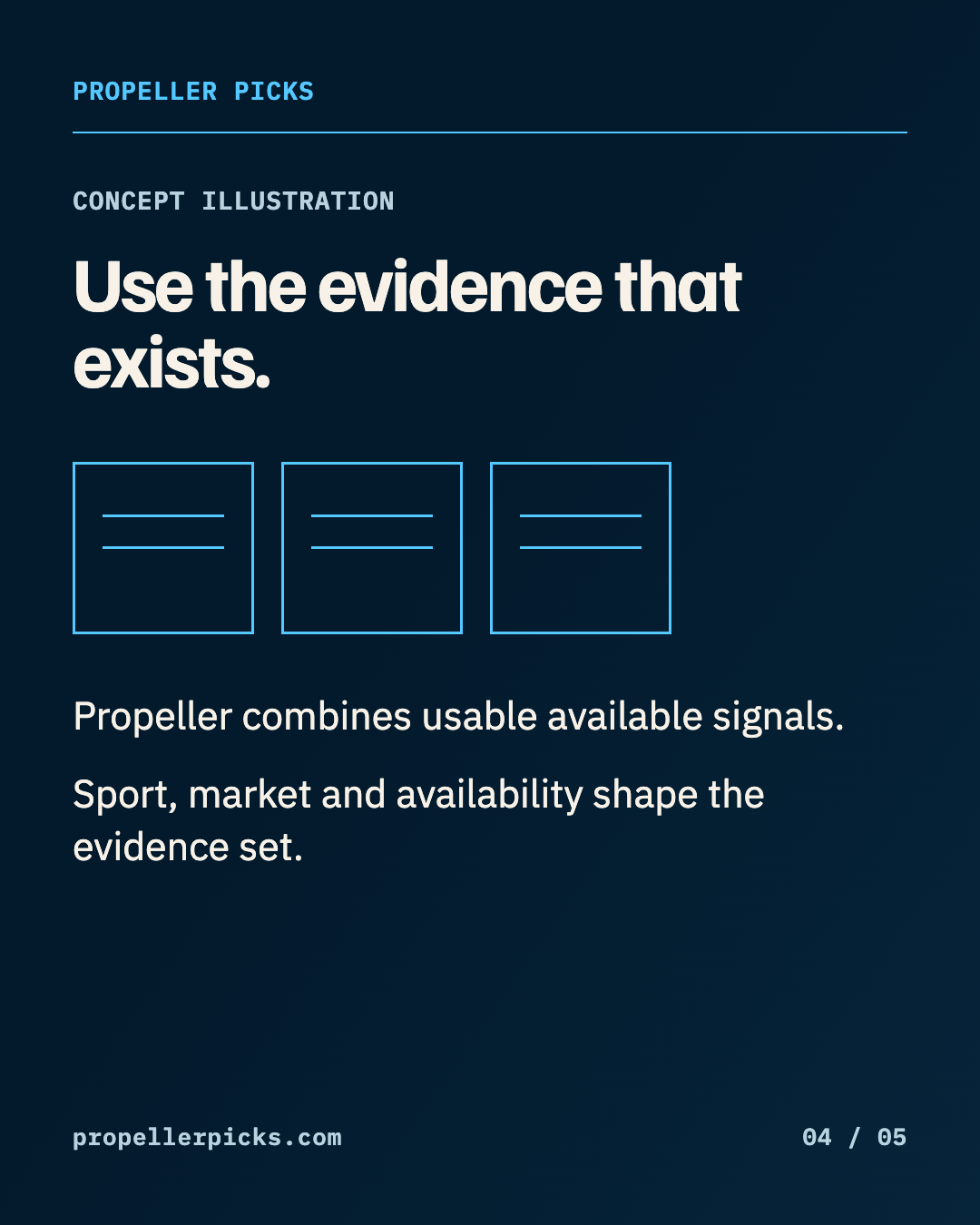
Propeller uses available sport-specific signals. These six categories describe the research context; they are not a promise that every input exists for every player or sport.
- Market
- Listed line and available pricing context.
- Form
- Recent and longer-term player performance.
- Role
- Usage, minutes, touches or other opportunity.
- Matchup
- Opponent and environment effects.
- Availability
- Injuries, lineups and teammate context.
- Context
- Sport-specific pace, venue, rest and game state.
Confidence describes directional strength.
Propeller’s 50–100 confidence score describes support for the displayed direction. A score of 70 is not a 70% chance of winning. Confidence, accuracy, calibrated probability and profit are different measurements. Read the score alongside the exact line and available evidence; do not turn it into an unsupported probability. The published product definitions describe these limits.
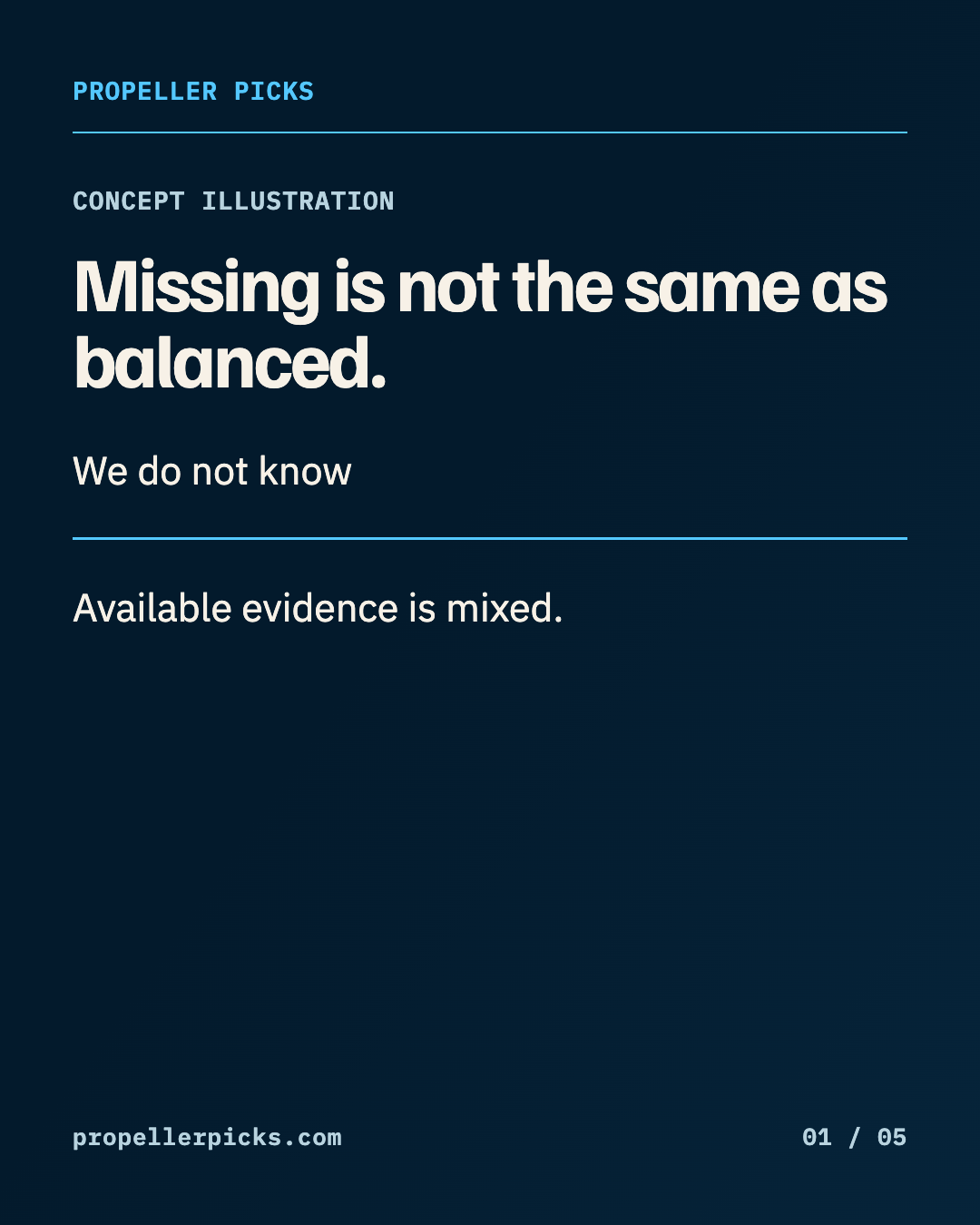
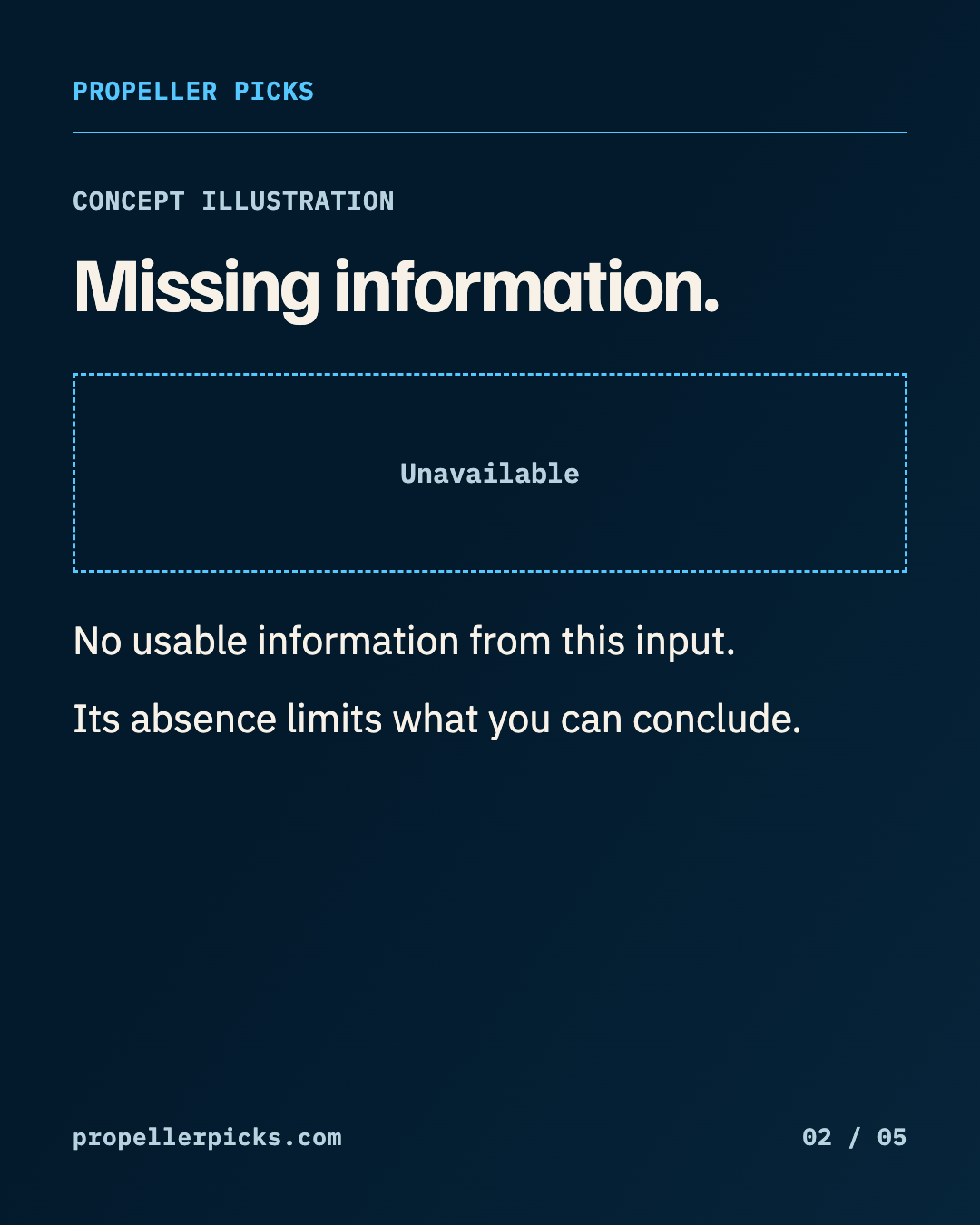
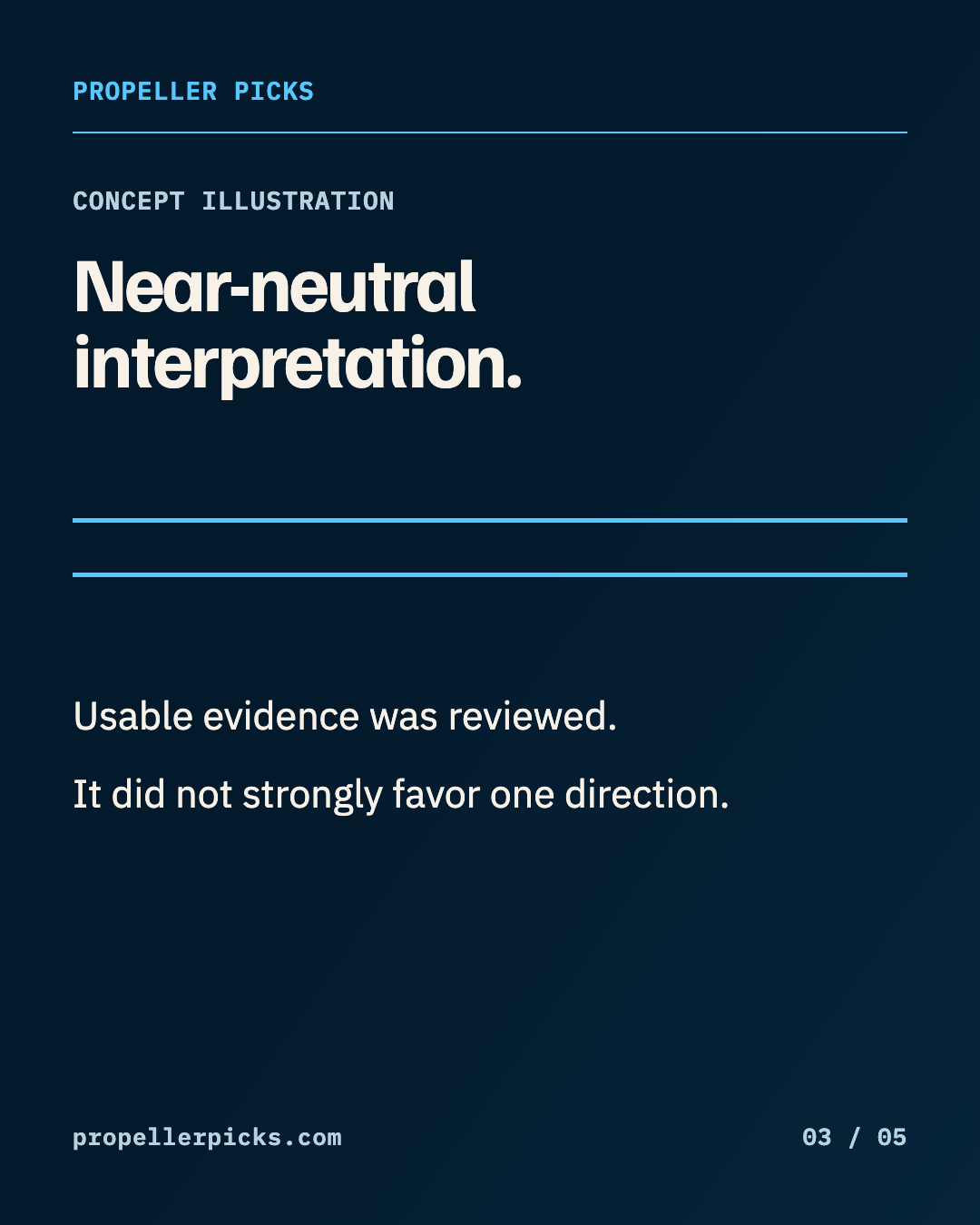
Missing information is a limitation to disclose. It does not mean the evidence is balanced, and it is not an independent vote for either direction. Call an input neutral only after reviewing usable evidence. If the information is missing, mark it unknown. This follows the Analyzer’s missing-input guidance, without assuming how an unavailable signal is handled internally.
02 / Uncertainty
Keep the question and its limits together.
Analysis belongs to the displayed line. If the line changes, the research question changes. Match the exact fields using the player-prop line comparison guide before carrying an interpretation forward.
Late scratches, sparse samples, role changes, source outages, incorrect line mappings and unusual game states can degrade analysis. Check current lineups and prices independently. Preserve the distinction between a slate date, analysis time and source-observation time; a newly generated response does not prove a newly observed line.
Rows enter the public record when they are first observed in the preview. The current API does not establish whether that happened before the event started or before its outcome was known.
A general assistant can structure a question, summarize evidence and present a countercase; available tools may retrieve sources. The public Analyzer provides a limited research snapshot. The prompt builder organizes verification instructions. Each layer still needs evidence matched to the question. The published research protocol includes fresh sources, a countercase, missing information and permissible no action.
03 / Real product observation
What Propeller’s prompt asked—and what still needed evidence.
On September 10, 2026, an AI-operated product check followed a public MLB card into the prompt builder. The generated prompt retained snapshot context and requested current verification. The inspected tool response reported responseGeneratedAt: 2026-09-10T15:17:05Z, but analysisAt and marketObservedAt were both null. Those were response fields, not visible clocks on the card. They meant unknown in that observation; they do not establish today’s values.
| Instruction generated | Evidence still required |
|---|
| 7: Use direct primary links; separate inference. | The source behind each answer sentence, and whether it supports that sentence. |
| 8: Disclose missing or conflicting information. | Unresolved analysis and source times; the two null clocks remained unknown. |
| 10: Allow no action if evidence is incomplete. | Current line and source confirmation before a directional conclusion. |
This was an AI-operated product check on September 10, 2026, not an observed answer from an external assistant. Generating instructions did not verify the missing facts.
The prompt requirements and clock definitions were checked September 19. A separate current UI check used fictional inputs and generated those requirements; no external assistant received the prompt. A good prompt sets the questions. The next audit checks whether an answer supplies the evidence.
04 / Written illustration
Three sentences. Three different claims.
Written illustration, not an observed assistant response. Both records below are invented. They represent no real player, injury or current board.
Shared identity: Fictional Board A; Example Player B; Cedar vs Birch; September 2, 2026, 7 PM America/Chicago; receiving yards; More. Source A lists 49.5, updated September 1 at 10 AM CDT. Source B lists 54.5, updated September 1 at noon CDT. No injury or explanation source is supplied.
Sentence 1 / Observation
“The two records list 49.5 at 10 AM and 54.5 at noon.”
Classification: Sourced observation within the illustration.
Evidence: Both fictional records and their source-update clocks support the reported values. Allowed conclusion: These are the values the records list. Still missing: Whether the records are correct or remain current.
Sentence 2 / Interpretation
“The later record asks whether the player exceeds a higher yardage threshold.”
Classification: Supported interpretation.
Evidence: The identity, event, stat and direction match; 54.5 minus 49.5 equals five receiving yards. Allowed conclusion: The threshold increased by five in these records. This says nothing about a player forecast or how the changed line will perform.
Sentence 3 / Unanswered
Before: “The number rose because a teammate was ruled out.”
Classification: Unsupported causal claim; unanswered question.
Evidence required: A reliable availability record and evidence connecting that event to the change. Neither is supplied. Even an injury report alone would not prove causation.
After: “These records do not establish why the line changed.”
Before saying “changed,” match player, event, stat, source and clock meaning. Different sources or stat types may describe different questions. A source’s existence does not guarantee its accuracy. The repair preserves what is known without inventing a reason.
05 / Your evidence worksheet
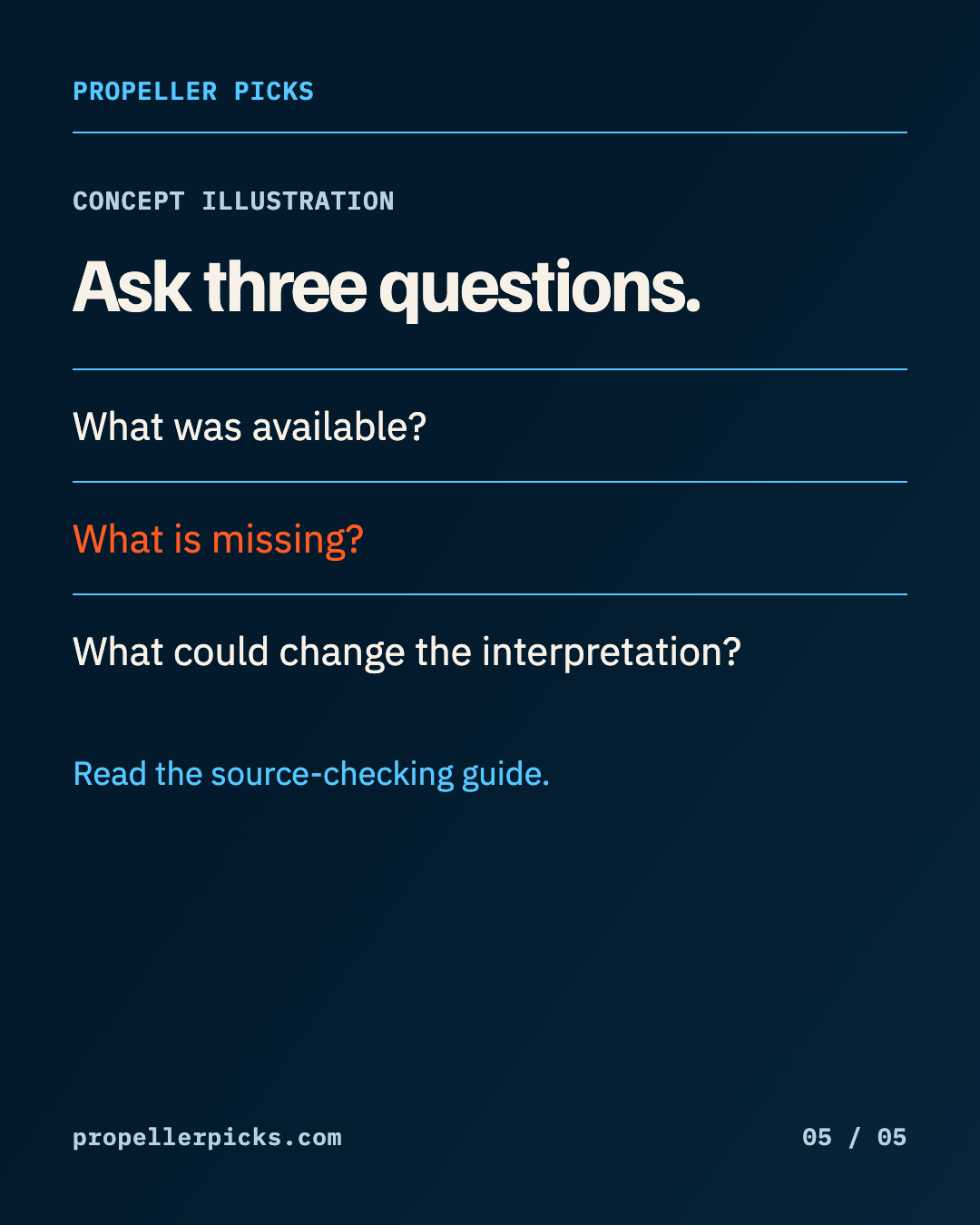
Make one sentence inspectable.
The one-page worksheet has three writing blocks. In each, copy a sentence and label it Observation, Interpretation or Unanswered. Record the named source and URL, its time and what that time means, and the exact player, event, stat and line. Note contradictions, the conclusion the source allows, and missing confirmation.
A primary source is the original record; a secondary source describes another source’s record. Identify which you have. Follow a summary back to the original when possible, and check whether both describe the same event and observation time. Preserve disagreement rather than choosing the version that fits your preferred answer.
Check the source behind one sentence — PDFUse the player-prop research log to preserve the full question and later review. The worksheet is the smaller sentence-level check.
Repair the answer—or leave it unanswered.
- Locate the actual evidence behind the sentence.
- Match the source to the exact question and clock meaning.
- Label the step from observation to interpretation.
- Keep missing and conflicting information visible.
- Rewrite unsupported wording to the narrowest supported conclusion.
- Stop if essential confirmation is still missing. No action is a valid result.
Questions and context
What else should you check?
Can AI verify live lines?
An assistant may retrieve sources through available tools. Inspect the actual returned source, exact player, event, stat and line, and source-observation time. Without those, the answer has not established a current line.
Is confidence a probability?
No. Propeller’s score describes directional model strength. It is not automatically a calibrated win probability or a statement of expected profit.
What if sources disagree?
Check their identities, times and definitions. Record both versions and the unresolved difference. Do not silently combine incompatible records or treat the newest page date as proof of freshness.
What if an input is unavailable?
Mark it unknown and explain which conclusion it prevents. Missing information is not neutral evidence. If it is essential to the question, leave the conclusion open.
Separate sports, shared disclosure.
Representative context differs: MLB research may consider park and batting role; NBA, minutes and rotations; NFL, opportunity and game environment; NHL, line role and goalie context; soccer, starting XI and competition. These examples do not promise daily live availability. Each sport still requires matched sources and honest uncertainty.
See methodology, the machine-readable version and the editorial and corrections policy.
Version history: July 14, 2026 · v2026.07 initial public model card, confidence definition and forward-publication limits. September 19, 2026 · source-check lesson, dated prompt audit and printable worksheet added. September 26, 2026 · missing-information visual guide and accessible companion added. This update does not re-certify every older product claim.